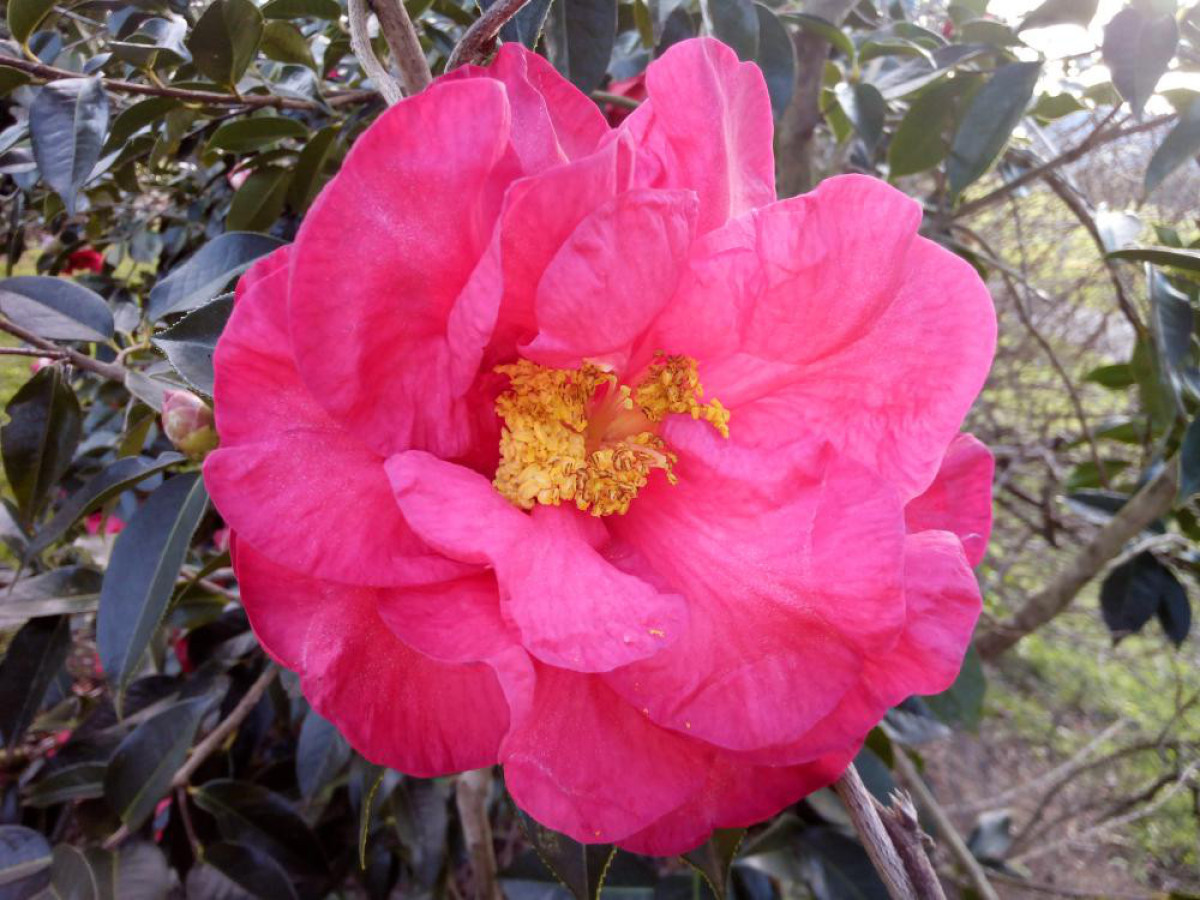
WHERE TO PLANT: C. Japonica, C. Reticulata and the various Camellia Hybrids may need protection from very hot mid-day sun. "Shade" is a very relative term; in climates where humidity is high, Camellias can stand more then in climates that are hot and dry. For instance, here on the Southern NSW coast (just below Sydney) our camellias grow in full sun all day and do wonderfully well. However, you will find that the whites and pale pinks will need more shade than the deeper colors just because these pale flowers tend to burn (brown) in excessive sunshine. While you will often hear that Camellias do best with part shade, this is not necessary where climates are relative mild, such as mid NSW coast to Victoria. Good sunshine ensures plenty of blooms.
THE SOIL: All Camellias require the same soil conditions.
They prefer a well-drained soil that is high in humus content and slightly acid. If azaleas, rhododendrons or manolias like your soil, camellias will too. In preparing the soil for planting in the ground, mix equal portions of sandy loam and peat moss, by volume. If leaf compost is available, it may be used in place of peat moss.
HOW TO PLANT: The standard advice of "Dig the planting hole twice as large as the root ball and one and one-half times as deep" holds. (Though if you have great soil, you probably know you can cheat a bit on this!) Fill the bottom of the hole with the prepared soil and tamp down firmly so that the top of the root ball, when placed in the hole is about 2cm ABOVE the soil surface, to allow for some settling. The only way Camellias are temperamental is in the depth of the planting. The air requirement of the root is high, and when planted too deep, the roots will smother. The root crown should never be more than 2" below the surface of the soil. Fill in around the sides of the root ball with this same mixture, tamping it down firmly with your feet as you go, then mound some soil about 10cm high in the form of a saucer on the outside rim of the planting hole. Fill this saucer with water.
CARE AFTER PLANTING
WATERING: Camellias do best if the soil has some moisture in it at all times, but that does not mean being WET at all times. Water well and deeply, but only as often as your own local weather conditions demand. Too much water, too often, will cut off the air the roots must have. We believe it is very beneficial to mulch all your garden beds, including camellias, as this helps retain moisture in the soil and protects roots.
During the flowering period, watering should be watched, as the mature flower is 90% water and a drying out of the plant can cause undersize blooms, as well as bud drop. Camellias will use sub-soil moisture during the summer growing periods. For container-grown Camellias, you will generally need to fill your containers once a week in the summer, and in the winter, you should be able to stretch the period to approximately ten days. Stick a spade or your finger as far into the soil as you can and check down at least 10cm for moisture. Don't water just because the surface is dry - that is not where the Camellia's roots are searching for water!
On very dry days, or when the temperature rises above 85 degrees, sprinkle the foliage and the mulch in the late afternoon.
FERTILIZING: Fertilizing, or feeding, should start with the first signs of growth, even though the plant is still blooming. (So that means late Winter /early Spring is the time to buy some Camellia food.) Caution should be taken never to overfeed. Camellias that have been injured with over-fertilizing take several seasons of special care to recuperate. Cottonseed meal, or commercial food specifically for Camellias, should be used. Your local nurseryman or garden shop will carry the prepared mixture best suited to your own local conditions. Follow the directions as printed on the package. If the plant is dry, water well the day before feeding - never feed a dry plant.
PESTS AND DISEASE: Other than feeding and watering, Camellias require very little care. Sometimes insect and pest control is necessary to insure a healthy plant but generally speaking Camellias rarely need spraying. Scale and mites are the most serious threat, as they extract the plant juices and interfere with the normal development of foliage and stem growth. If you see something that does worry you, consult your local nursery or do some homework online to make certain that spraying is necessary.
Raraflora Nurseries